SME KYC Onboarding UX Case Study
Context
Industry
Financial Services
Niche
Banking & SME Services
Company Size
5,000+
HQ
Bucharest, Romania
Services provided:
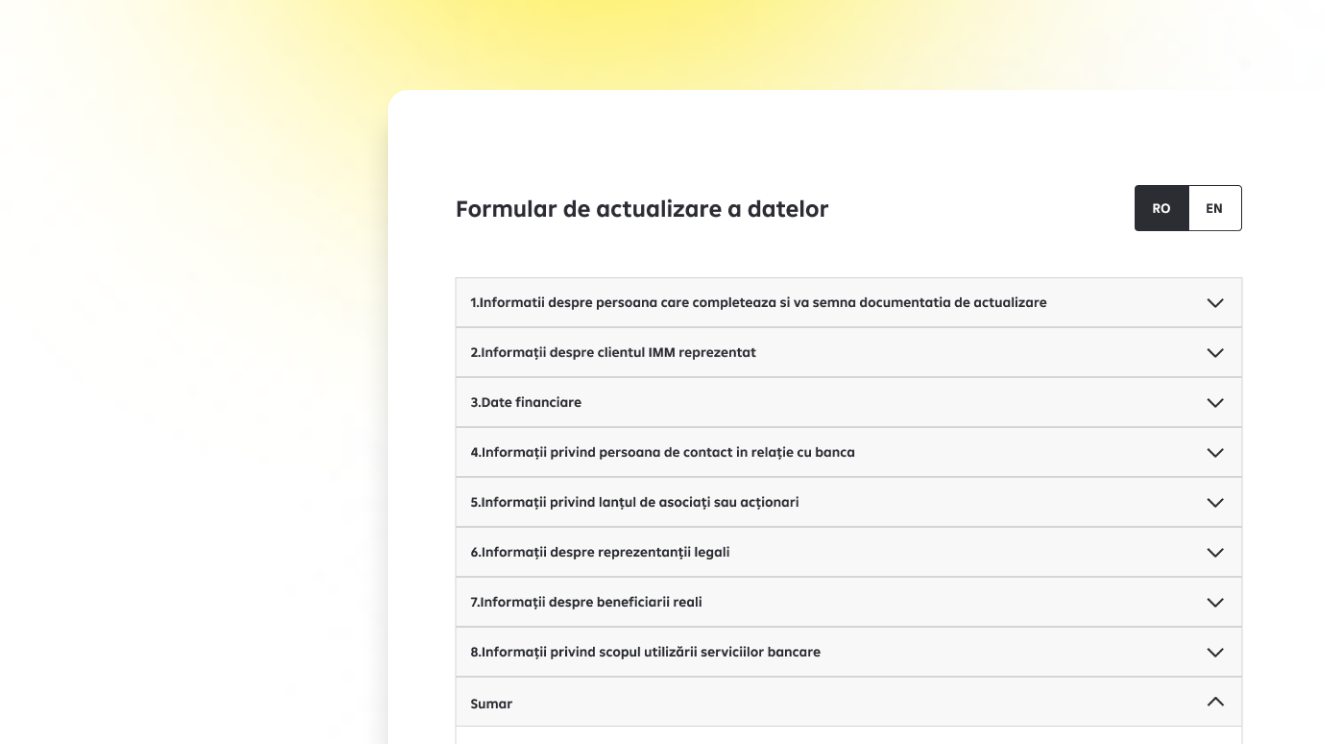
An SME digitalization initiative that transformed the Know Your Customer (KYC) process from paper forms into a structured digital experience. The project aimed to reduce processing time, improve data accuracy, and make onboarding easier for small and medium enterprise clients.
Problem
The SME sector relied on lengthy printed KYC forms that created friction during onboarding. The paper-based system led to data-entry errors, slow processing, and a poor experience for business clients seeking banking services. The bank needed a digital solution that maintained regulatory compliance while improving efficiency.
Legacy paper-based forms
Causing delays, errors, and poor customer experience in SME onboarding
Complex data requirements
Needing careful information architecture to maintain compliance
Diverse user needs
Spanning business owners, accountants, and bank staff with varying digital literacy
Regulatory constraints
Requiring strict adherence to KYC and compliance standards
Role, team, and constraints
- Role
- Product designer
- Team
- [TODO: add project team and collaborators]
- Constraints
- Ownership
- SME onboarding, research, information architecture, and compliance
- Contribution
- Research, requirements translation, progressive disclosure, UI design, and validation
Research and key insights
[TODO: Add only the research, existing customer knowledge, stakeholder input, or regulatory evidence that actually shaped this project. Summarize the key insights and what changed because of them.]
Approach and decision points
[TODO: Describe the sequence of work and the decisions that shaped the direction. Include constraints, trade-offs, and recommendations that were accepted or rejected.]
Solution
User Research & Discovery
Conducted user research with SME clients, business accountants, and bank staff to understand pain points in the existing process. Interviews and observational studies identified critical touchpoints and opportunities for digital transformation.
Information Architecture Design
Restructured the complex KYC form into logical, digestible sections using progressive disclosure. Organized information hierarchically to guide users through the process while maintaining all required regulatory data collection points.
Requirements Gathering & Translation
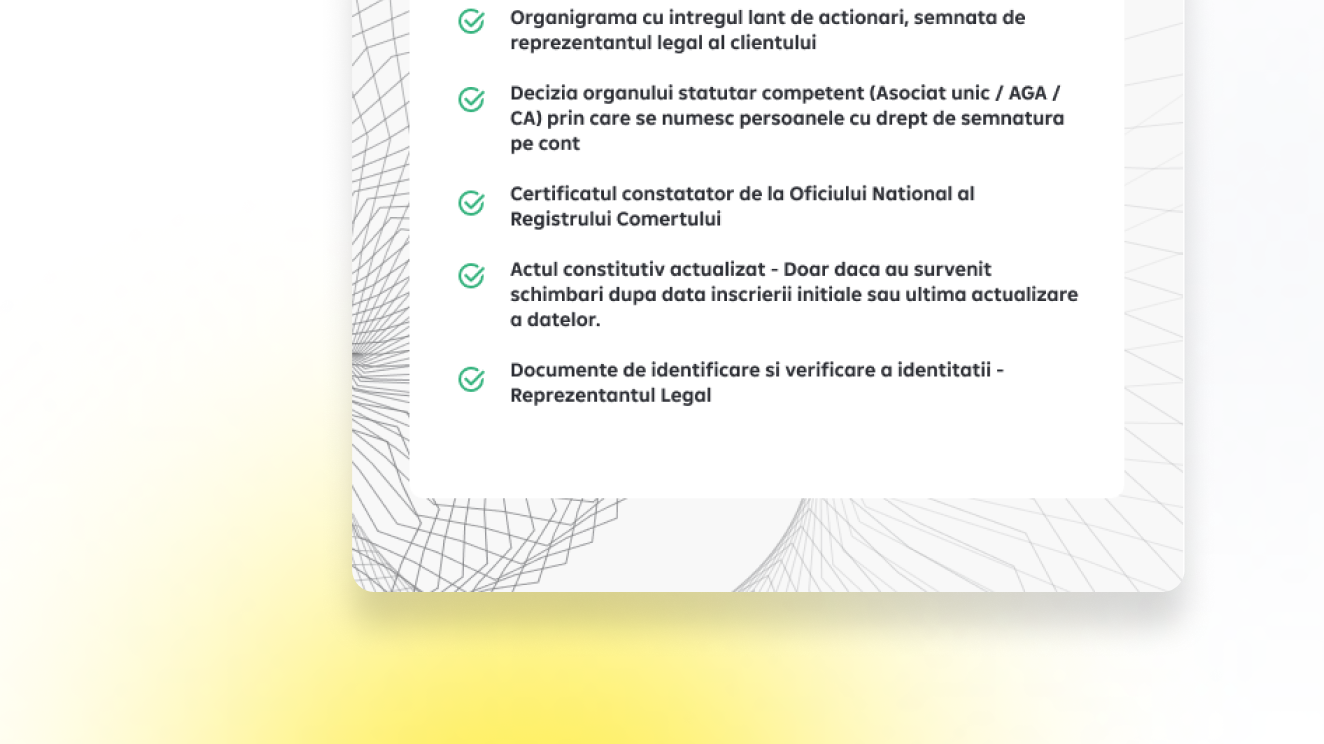
Worked closely with compliance, legal, and business teams to translate regulatory requirements into user-friendly digital interfaces. Created detailed specifications that balanced regulatory needs with optimal user experience.
UI Design & Validation
Designed intuitive interfaces with clear visual hierarchy, smart defaults, and contextual help. Validated designs through iterative testing with actual SME clients to ensure the digital form was accessible and efficient for all user groups.
Artifacts
Information Architecture
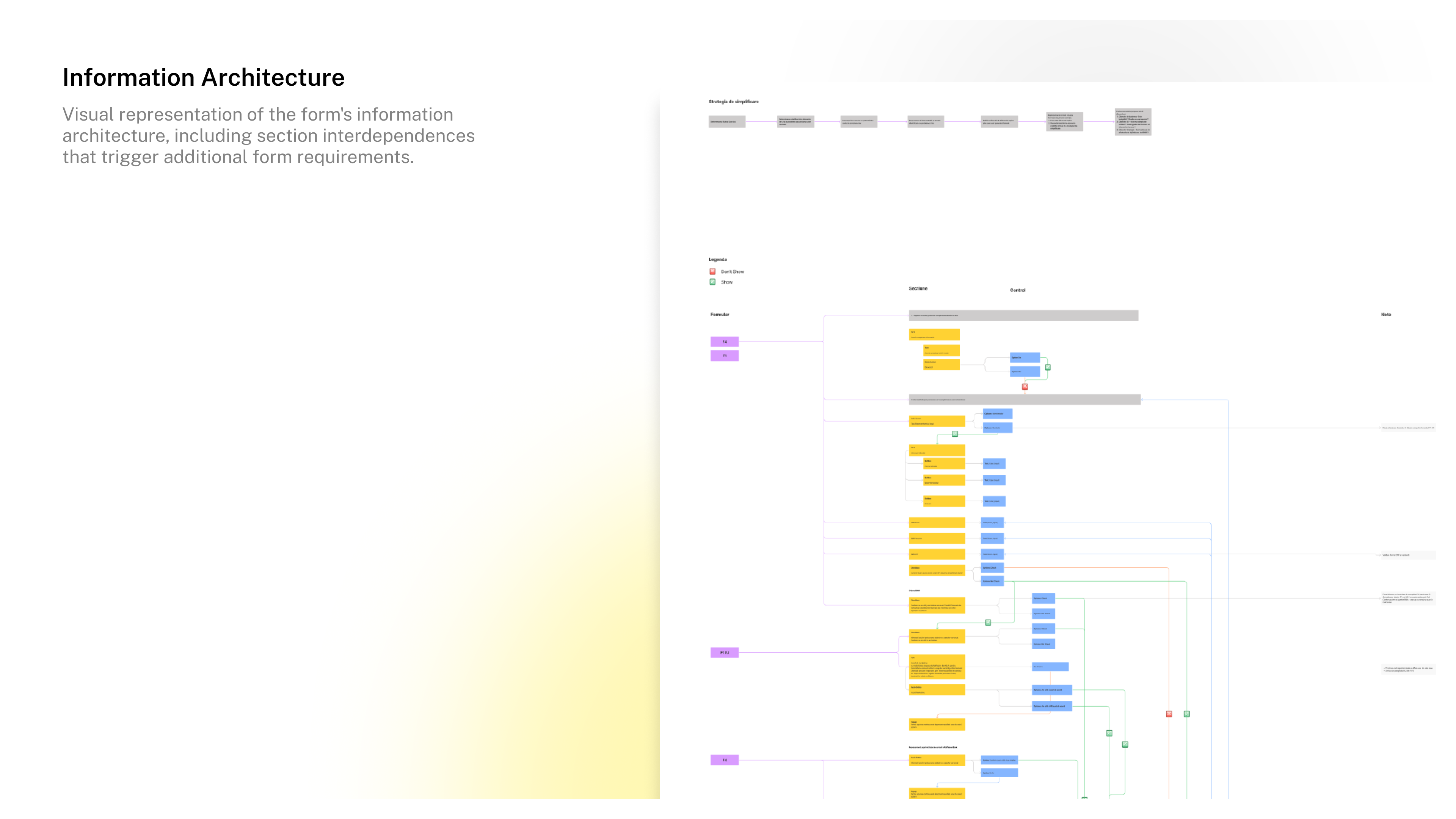
Visual representation of the form's information architecture, including section interdependences that trigger additional form requirements.
Screen Samples
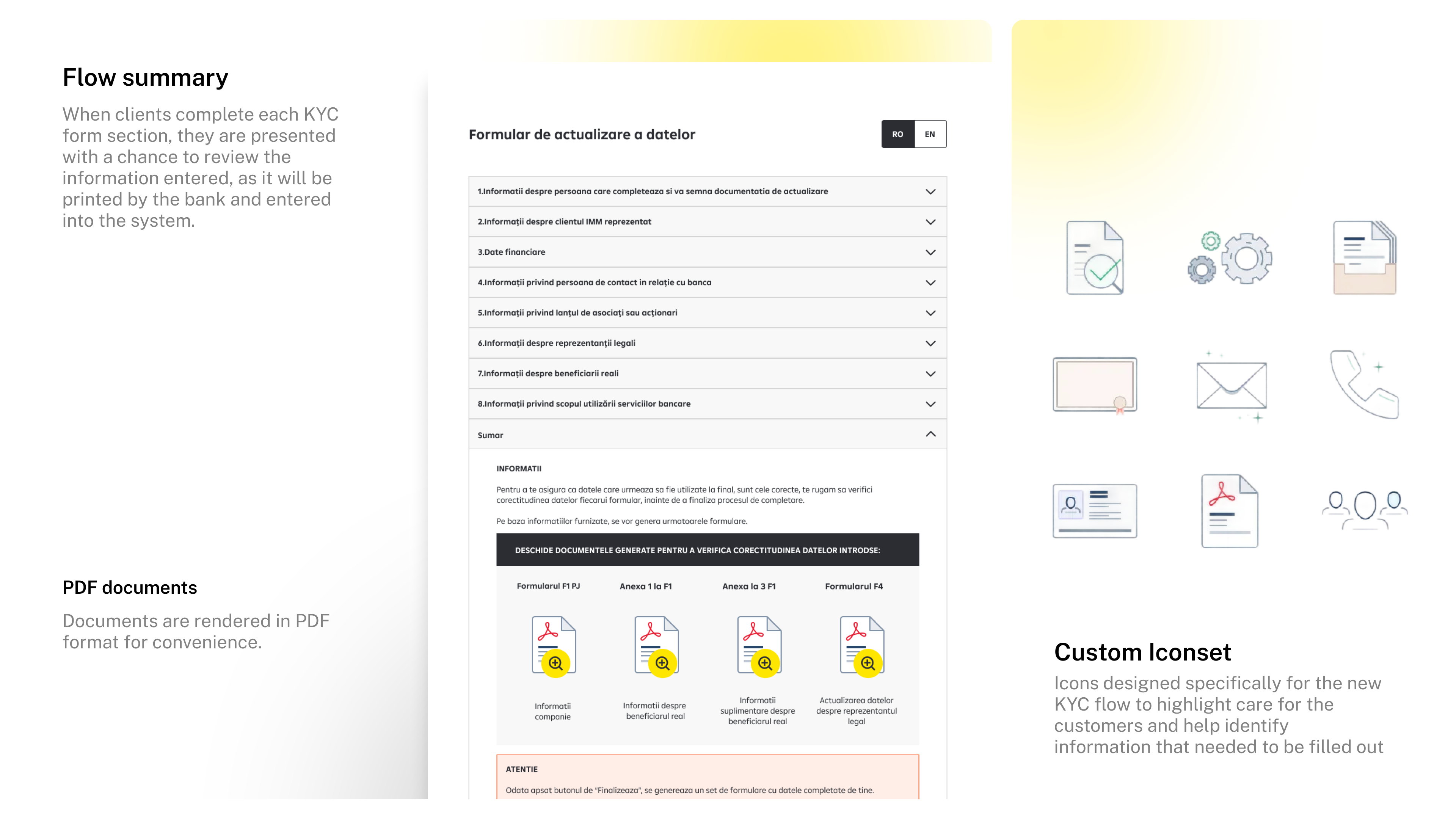
Flow summary
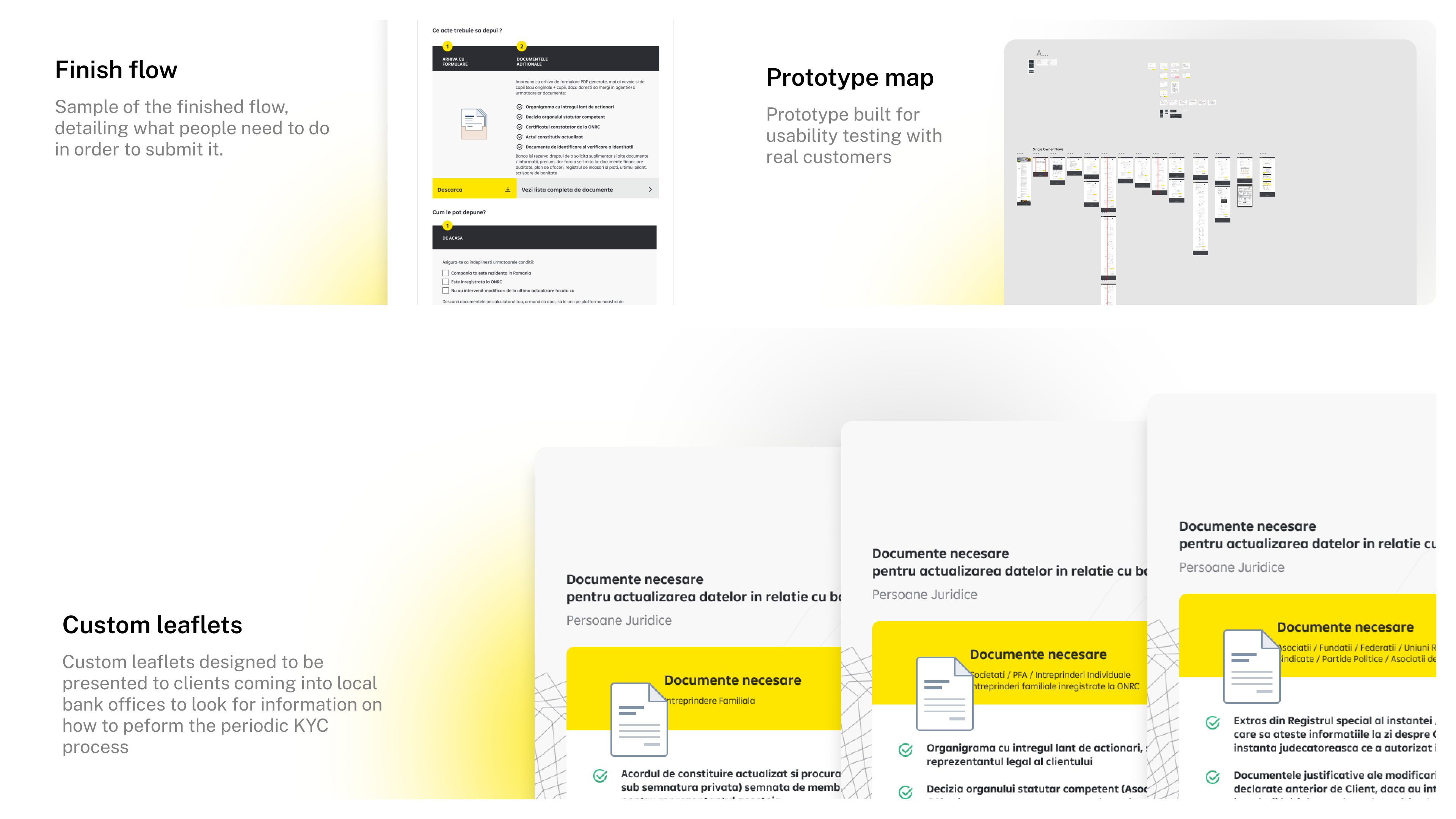
Leaflets and other sample
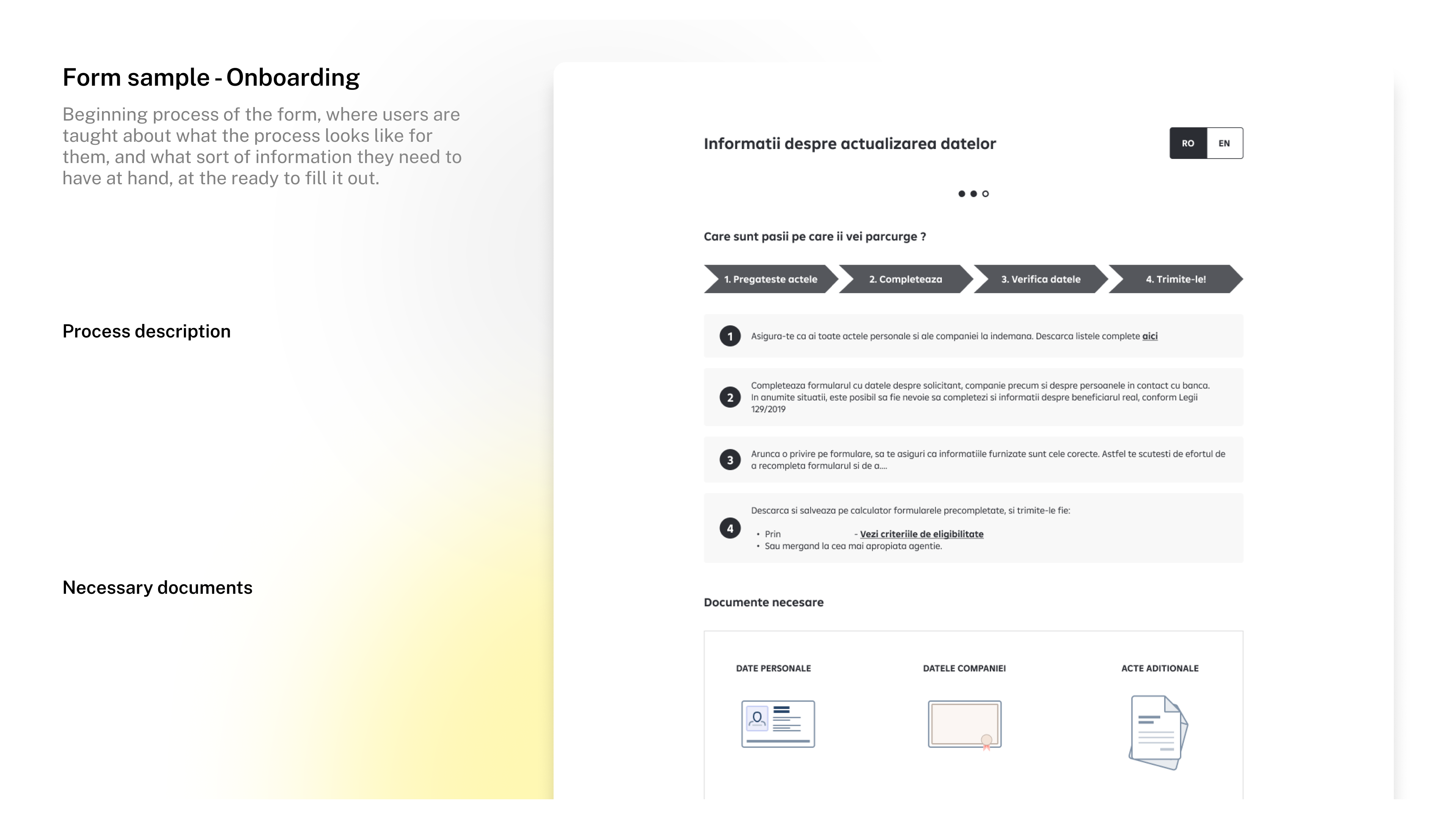
Form onboarding screen
Usability simulations
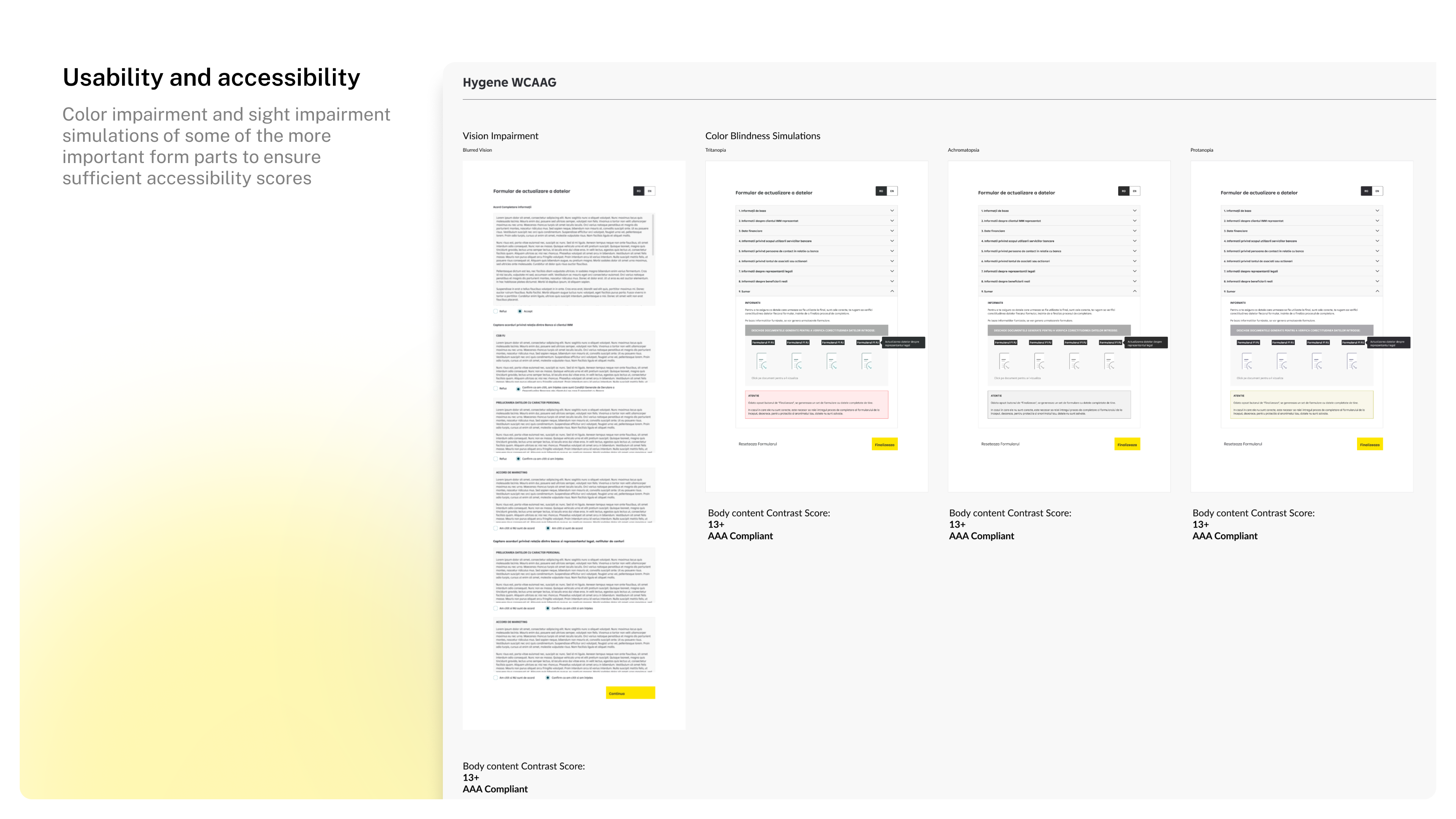
Color impairment and sight impairment simulations of some of the more important form parts to ensure sufficient accessibility scores
Impact
[TODO: Label each outcome as measured, observed, reported, launched after your involvement, or not measured.]
Fewer errors
After usability testing
Usability-testing participants reported greater confidence when filling out the form.
Future-proof
Compliant on a budget
After the redesign, the solution ticked both the accessibility and regulatory compliance boxes requested by regulators. In addition to this, it also complied with the strict budget and resource allocation constraints set at that time.
Project retrospective
[TODO: Optional. Describe what the project revealed, what remained unresolved, and what happened after your involvement. Do not turn organisational constraints or rejected recommendations into a personal failure narrative.]